
How Should Small and Micro Craft Breweries Choose a Keg Washer?
I. Introduction
In an industry where single-use PET kegs have not yet become widely adopted, 20-liter U.S.-standard kegs and 30-liter European-standard kegs remain the mainstream packaging containers for draft beer at domestic craft breweries. The cleaning and sterilization of kegs is a critical step in the production of kegged beer. If cleaning is incomplete or sterilization is inadequate, residual yeast, protein impurities, and harmful microorganisms inside the kegs can easily lead to quality issues such as beer rancidity, spoilage, and secondary fermentation, resulting in product quality incidents. Compared to the automated cleaning and filling production lines found in large breweries, small and micro craft breweries have limited production capacity, compact facilities, and insufficient operational staff, making them suitable only for small keg washing equipment with 1–3 workstations.
Therefore, selecting the right keg washing machine is essential for small and micro craft breweries to maintain consistent product quality and reduce production losses.
II. Principles of Cleaning and Sterilization
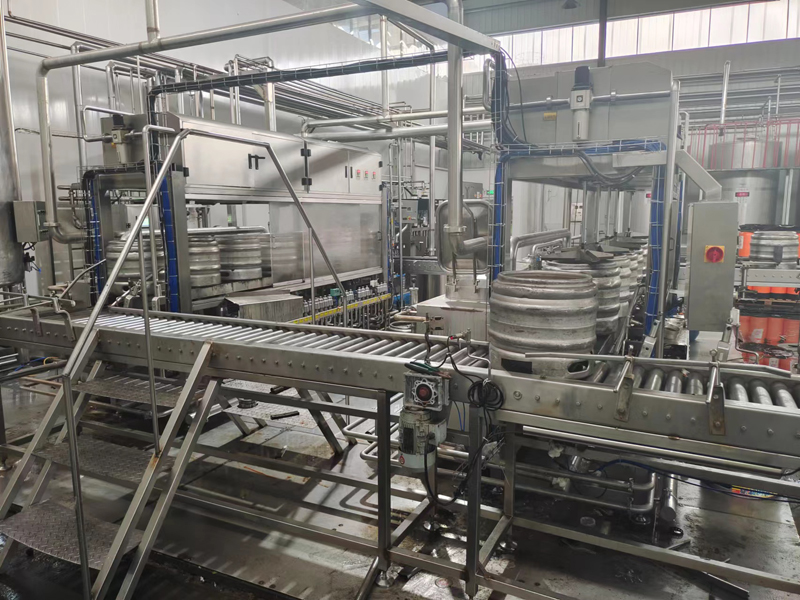
Keg cleaning actually consists of two core stages: cleaning and sterilization. Thorough cleaning is a prerequisite for effective sterilization, and both stages are indispensable. The cleaning stage removes residual beer, deposits on the inner walls, and solid impurities such as yeast and proteins trapped in the gaps of the tap spout, thereby eliminating surfaces where microorganisms can adhere; The sanitization process uses hot water, steam, disinfectants, and other agents to eliminate all residual contaminants within the keg, thereby preventing beer from spoiling or deteriorating. If impurities are not thoroughly removed during the initial cleaning stage, these contaminants will block contact between high temperatures, disinfectants, and microbial colonies, forming a protective layer that prevents heat-resistant bacteria and spores from being completely eradicated.
Beer filled into such non-compliant kegs will rapidly spoil in non-cold-chain, high-temperature environments. Flavored fruit beers containing added sugar are also prone to secondary fermentation, severely compromising product quality. The cleaning and sterilization standards for kegs require that the interior be free of visible impurities and deposits, with microbial levels controlled within industry-permitted limits to achieve a sterile state to the greatest extent possible.
III. Comparison and Optimization of Cleaning Processes
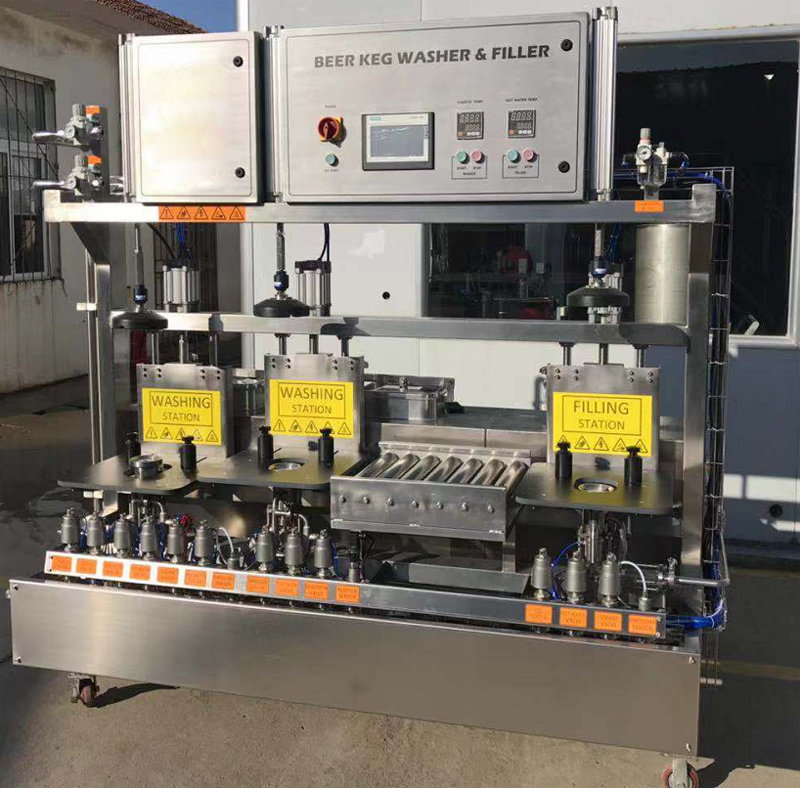
Currently, barrel washers on the market are primarily divided into two categories: simple and complex processes, each suited to different production and sales scenarios.
1. Simple Cleaning Process: Cylinder clamping → Opening the spout → Flushing residual wine with compressed air → Pre-rinse → Hot alkaline circulation wash → Hot water rinse until neutral → Steam sterilization → CO₂ deoxygenation → CO₂ pressurization → End. (Air purging steps between each phase are omitted.) Keg washers using this process are equipped only with dual tanks for alkaline solution and hot water, along with basic pump components. They feature a simple structure, low equipment costs, a small footprint, and high operational efficiency. This process is the mainstream configuration for small-scale 1–3-station keg washers in China. However, its core shortcomings include incomplete cleaning of the keg spouts, limited sterilization capacity, and poor effectiveness against heat-resistant bacteria. It is only suitable for production scenarios involving products with short shelf lives, local sales, rapid turnover, and returnable barrels in good sanitary condition. If products have long shelf lives, are sold across regions or over long distances, are not transported via a continuous cold chain, or if returnable barrels are stored for extended periods—leading to rancidity and spoilage of residual wine—this process cannot meet production requirements and is highly prone to product quality issues.
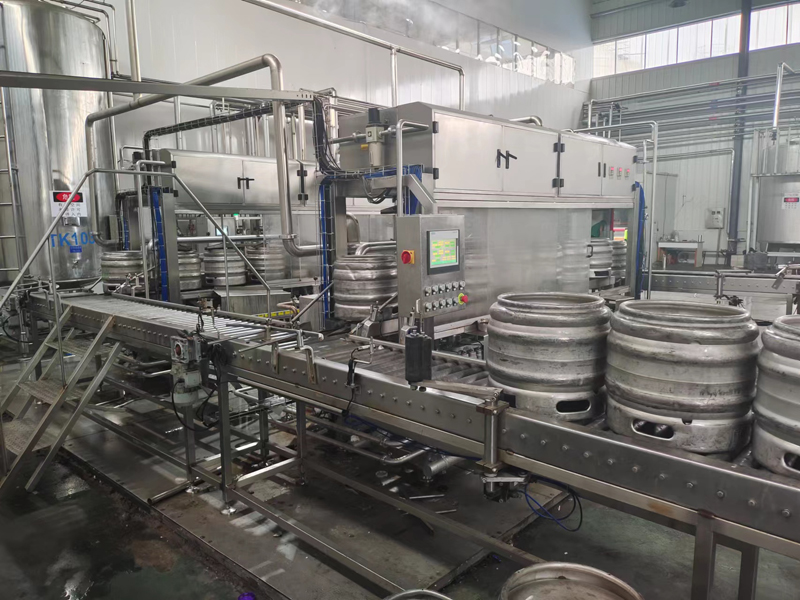
2. Complex Cleaning Process: Cylinder clamping → Open the wine spear → Purge residual wine with compressed air → Forward pre-rinse → Reverse pre-rinse of the wine spear → Forward circulation wash with hot alkali solution → Forward pulse wash of the wine spear with hot alkali solution → Reverse rinse of the wine spear with hot alkali solution → Single forward rinse with hot water → Single forward pulse wash of the wine spear with hot water → Single reverse rinse of the wine spear with hot water → Second forward rinse with hot water → Second forward pulse wash of the wine spear with hot water → Second forward rinse of the tap with hot water until neutral → Forward rinse with disinfectant → Forward pulse cleaning of the tap with disinfectant → Reverse rinse of the tap with disinfectant → Forward rinse with hot water → Forward pulse cleaning of the tap with hot water → Reverse rinse of the tap with hot water → Steam sterilization → Reverse steam sterilization of the tap → Steam pressure-holding sterilization → First CO₂ degassing → Degassing interval → Second CO₂ degassing → CO₂ pressurization → Pressure relief at the cleaning head → End. (Air purges between each step are omitted.) This process is comprehensive; through pulsed cleaning and forward/reverse rinsing, it thoroughly cleans all crevices and hard-to-reach areas of the wine spear. Combined with a dual sterilization mode of heat sterilization and disinfectant solution, it can efficiently eliminate stubborn microorganisms such as heat-resistant bacteria and spores, significantly reducing microbial risks. The drawbacks include a cumbersome process, time-consuming barrel washing, high energy consumption, extremely high requirements for equipment hardware and software configurations, and expensive equipment costs. This process is only suitable for large-scale automated cleaning and filling production lines and cannot be implemented by standard small-scale barrel washers with 1–3 stations.
3.Optimized Process for Small and Micro Breweries: Taking into account the production capacity, cost, and efficiency requirements of small and micro craft breweries, this optimized process retains the core functions of the complex cleaning process while streamlining redundant steps to create a highly adaptable workflow. Cylinder clamping → Opening the tap → Purge residual liquor with compressed air → Forward pre-rinse → Reverse pre-rinse of the tap → Forward circulation wash with hot alkali solution → Reverse rinse of the tap with hot alkali solution → First forward rinse with hot water → First reverse rinse of the tap with hot water → Second reverse rinse of the tap with hot water → Second forward rinse with hot water until neutral → Forward rinse with disinfectant solution → Reverse rinse of the tap with disinfectant solution → Reverse rinse with hot water → Forward rinse with hot water → Steam sterilization → Reverse steam sterilization of the tap → Steam pressure-holding sterilization → CO₂ deoxygenation → CO₂ pressurization → Pressure relief at the cleaning head → End. (Air purges between steps are omitted.) This process balances cleaning and sterilization effectiveness with production efficiency, retaining the core procedures of bidirectional rinsing and dual sterilization to thoroughly clean hard-to-reach areas of the tap and eliminate stubborn microorganisms. Compared to a full, complex process, this approach significantly reduces energy consumption, processing time, and equipment costs, making it suitable for small-scale barrel washers. Currently, very few small-scale barrel washers in China are equipped with this optimized process. We recommend that small and micro-distilleries prioritize purchasing equipment featuring this process; if unavailable, they may contact manufacturers to request custom modifications. It is also important to note that a comprehensive cleaning process serves as the foundation, and precise control of parameters—such as cleaning duration, medium temperature, chemical concentration, and steam pressure—is key to ensuring effective cleaning and sterilization. Improper parameter settings will still result in cleaning and sterilization that fail to meet standards.
IV. Considerations for Equipment Selection
1. Safety: Mitigating Production Safety Risks. Barrel-washing equipment involves high-risk media such as electricity, hot water, strong alkalis, disinfectants, and high-pressure steam; therefore, safety design is the primary criterion for selection.
Electrical Safety: The electrical distribution box must be waterproof, dustproof, and equipped with ground fault circuit interrupter (GFCI) protection to prevent short circuits and electric shock accidents caused by the workshop’s humid environment and liquid splashes.
Tank Safety: Tanks for hot water, alkaline solutions, and disinfectant must be constructed from compliant stainless steel with reliable welding to eliminate risks of corrosion, cracking, and liquid splashing.
Piping Safety: High-temperature steam lines must use thick-walled, seamless, pressure-resistant steel pipes with reliable connection methods to prevent steam leaks and scalding accidents caused by the high-temperature failure of standard pipe fittings or substandard O-rings.
Corrosion Protection: Tanks and piping designed for chlorine-based disinfectants must be made of corrosion-resistant materials, and welds must undergo anti-corrosion treatment to prevent long-term corrosion, cracking, and liquid leakage.
2. Stability: Ensuring Continuous Production Efficiency During peak craft beer production seasons, there is a high volume of keg turnover and frequent keg washing; stable equipment operation is essential for maintaining production capacity. When selecting equipment, common issues such as pump failures, solenoid valve damage, malfunctioning liquid level sensors, and abnormal valve operation must be avoided.
The equipment must be equipped with a comprehensive fault detection mechanism capable of issuing real-time alerts and shutting down the system in the event of low liquid levels, abnormal pressure, or valve malfunctions. This prevents problems such as dry cleaning, incomplete cleaning, and residual cleaning agents, ensuring consistent cleaning quality for every batch of kegs.
3. Design and Configuration: Focus on Intelligent Protection Mechanisms A high-quality keg washer must be equipped with a comprehensive protection and early-warning system: it should include overload and overcurrent protection devices for the water pump; utilize relay + contactor start-stop control to prevent module burnout caused by direct PLC control of the contactor; and be fitted with sensors for liquid level, air pressure, and steam pressure that automatically trigger alarms during abnormal operating conditions, thereby reducing the probability of equipment failure at the design level.
4. Materials and Manufacturing Processes: Determining Equipment Service Life Equipment Materials: For components such as the frame, water tank, piping, and brackets, 304 stainless steel is the preferred choice; for core electrical components, PLC modules, pneumatic valves, and water pumps, components from well-known brands are preferred to ensure stability and reduce maintenance and replacement costs. Manufacturing processes primarily focus on welding: all welds must be fully penetrated and formed on both sides;
Piping welds must be argon-filled both internally and externally to prevent “slag formation” and oxidation-induced blackening, which can lead to bacterial growth and rust at the weld sites; valve cores must be removed prior to welding to prevent high temperatures from damaging sealing components, thereby eliminating potential water and air leaks in the future.
5.Energy Conservation and Cost Reduction: Controlling Long-Term Production Costs The barrel washing process accounts for a high proportion of energy consumption; long-term energy savings can significantly reduce production costs. Prioritize steam-heated models (compatible with natural gas boilers), as their energy costs are far lower than those of electric heating equipment. At the same time, pay close attention to the equipment’s heat recovery design: hot rinse water can be recycled for pre-washing; residual heat from steam sterilization can be used to heat fresh water; and steam condensate can be recovered for reuse in the boiler. This achieves the recycle using of thermal energy, alleviates the production bottleneck of insufficient boiler steam during peak seasons, and prevents thermal energy shortages from hindering overall production progress.
6.After-Sales Service: Meeting the Maintenance Needs of Small and Micro Breweries. Small and micro craft breweries generally lack professional equipment maintenance personnel, so the responsiveness of after-sales service is critical. When selecting equipment, priority should be given to manufacturers with a comprehensive after-sales support system, prompt response times, the ability to quickly resolve malfunctions, and the provision of replacement parts. This helps avoid prolonged downtime due to equipment failures, which could impact production and delivery.
VI. Conclusion
The selection of a barrel-washing machine directly impacts the product quality, production costs, and market competitiveness of small and micro craft distilleries. By eschewing large-scale assembly lines and rudimentary, low-end equipment, small and micro breweries should opt for customized 1- to 3-station keg washing systems that feature rational cleaning processes, safety and stability, robust construction, high-quality craftsmanship, energy efficiency, and comprehensive after-sales support. This approach can effectively resolve issues with keg cleaning and sterilization failing to meet standards while keeping investment costs under control, thereby effectively mitigating the risks of beer rancidity and spoilage, meet the production requirements for kegged beer intended for cross-regional sales and long shelf life, and lay a solid production foundation for consistent product quality and the enterprise’s long-term development.
Post time: Nov-06-2026