
Carbonated Malt Drink Production System
From Malt Grain to Refreshing Carbonated Malt Beverage—Complete Processing, Mixing, Carbonation and Filling Solution. Carbonated malt drinks have become an increasingly attractive category for beverage producers looking to combine the rich flavor of malt with the refreshing character of a carbonated soft drink. Unlike conventional beer, carbonated malt beverages can be developed with different levels of sweetness, acidity, malt flavor, color and carbonation. Depending on the formulation and local regulations, the product can be produced as a non-alcoholic or low-alcohol beverage.
1. What Is a Carbonated Malt Drink?
A carbonated malt drink is a beverage based on malt-derived wort or malt extract and formulated with ingredients such as:
Malted barley or malt extract
Brewing water
Sugar or liquid sugar syrup
Hops or hop extract, when required
Food acids
Natural or artificial flavors
Caramel color
Stabilizers
Carbon dioxide
The final product can range from a traditional malt-flavored beverage to a sweet, fruit-flavored carbonated malt drink. For a non-alcoholic carbonated malt drink, the production process is normally designed to minimize or eliminate alcoholic fermentation. Another approach is controlled fermentation followed by alcohol reduction or dilution, depending on the target product and applicable regulations. In the United States, regulatory classification also depends on the formulation and whether the beverage has undergone alcoholic fermentation, so the product definition should be confirmed for the target market before equipment selection.
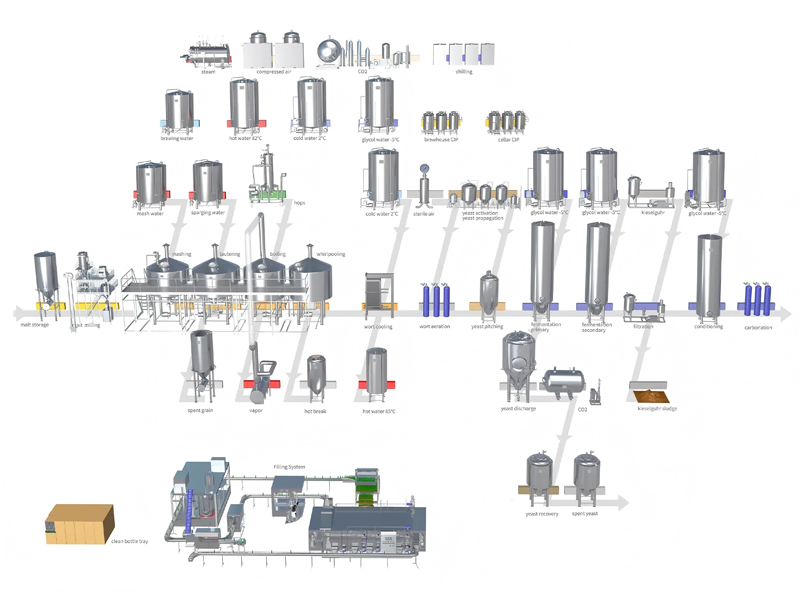
2. Carbonated Malt Drink Production Process
For customers using original malt rather than ready-made malt extract, ASTE team can design a complete process starting from malt milling.
A typical process is: Malt Receiving → Malt Cleaning → Malt Milling → Mashing → Wort Filtration → Wort Boiling → Wort Cooling → Formulation → Filtration/Homogenization → Pasteurization → Cooling → Deaerated Water Mixing → CO₂ Carbonation → Filling → Packaging
For some product formulations, fermentation, yeast separation and maturation can be incorporated into the process.
Simplified Process Flow
Malt → Milling → Mashing → Lautering → Wort Boiling → Wort Cooling → Malt Base Tank → Sugar/Flavor Blending → Filtration → Pasteurization → Cooling → Deaerated Water + CO → Carbonated Malt Beverage → Can/Bottle Filling
This process gives the producer flexibility to manufacture different recipes on the same production platform.
3. Malt Milling—The First Step for Consistent Quality
When the customer uses whole malt, proper milling is extremely important. The objective is not simply to make the malt as fine as possible. The husk should remain sufficiently intact to support efficient wort filtration, while the endosperm should be opened to improve starch conversion. ASTE team can configure:
Malt hopper
Malt cleaning system
Magnetic separator
Malt mill
Dust collection system
Screw conveyor
Bucket elevator
Malt dosing system
For larger projects, the milling system can be integrated with automatic weighing and conveying.
4. Mashing and Wort Production
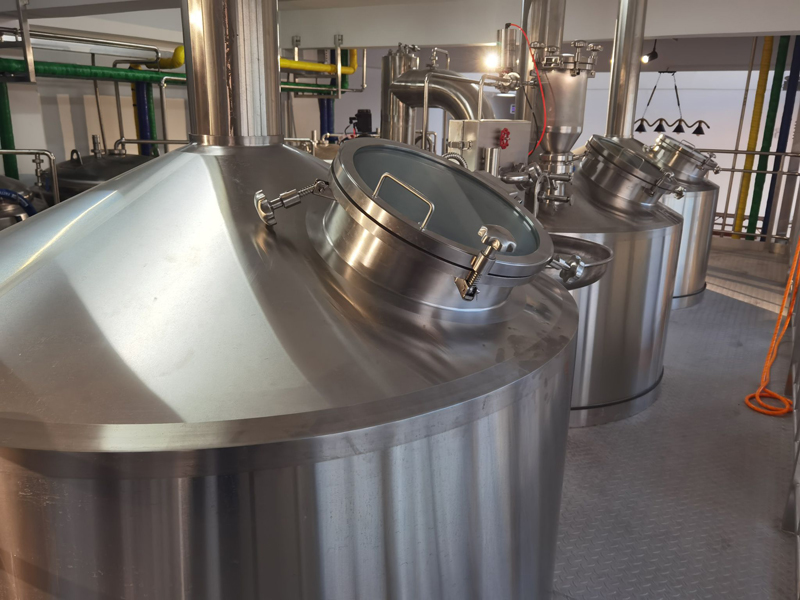
The milled malt is mixed with hot brewing water inside the mash tun. During mashing, enzymes naturally present in the malt convert starch into fermentable and non-fermentable carbohydrates. Typical process stages can include: Mashing-in → Protein Rest → Saccharification → Mash-out The actual temperature profile should be determined according to the malt specification and desired beverage characteristics. ASTE team’s brewhouse can be equipped with:
Mash tun
Steam heating system
Agitator
Temperature sensors
Automatic steam control
Lauter tun
Wort pump
Hot liquor tank
PLC control system
The result is a malt wort with controlled extract, color and flavor.
5. Wort Filtration and Boiling
After mashing, the mash enters the lauter tun. The lauter tun separates: Clear wort + spent grain Hot water can be used for sparging to recover additional soluble extract from the grain bed. Depending on the recipe, the wort may then enter a wort kettle for controlled heating and sterilization. For a carbonated malt beverage, the boiling process can be designed differently from a conventional beer brewing process because the final product may not require the same hop profile or bitterness. ASTE team therefore designs the brewhouse according to the actual malt beverage recipe rather than simply copying a conventional beer brewhouse.
6. Malt Base Preparation
After wort production, the malt base can be transferred to a dedicated processing or blending tank. This is where the beverage producer can adjust:
Extract concentration
Malt flavor
Color
Sweetness
Acidity
Flavor profile
Final beverage strength
For example, a sweet carbonated malt drink may contain sugar syrup, while a flavored malt drink may contain fruit flavor, lemon flavor, ginger, cola flavor or other ingredients. A dedicated Sugar Syrup Preparation System can be installed for large-scale production. Typical equipment includes: Sugar Dissolving Tank→ Sugar Syrup Filter→ Syrup Storage Tank → Metering Pump → Blending Tank
7. Formulation and Blending System
The formulation stage is one of the most important parts of a carbonated malt drink production line. A typical blending tank can receive:
Malt base
Sugar syrup
Treated water
Acid solution
Flavor
Color
Stabilizer
ASTE team can provide automatic dosing systems so that each production batch follows a predefined recipe. This is particularly useful for producers manufacturing multiple SKUs.
For example:
Malt Original
Malt + Lemon
Malt + Ginger
Malt + Cola
Malt + Fruit Flavor
The same production system can be designed to handle different formulations with recipe management through a PLC/HMI control system.
Post time: Sep-20-2026